mirror of
https://github.com/Dokploy/dokploy.git
synced 2026-10-15 13:21:11 +00:00
 Mauricio Siu
ff275fe94e
Mauricio Siu
ff275fe94e
Fixes #5092 — typing in the database/docker terminal overwrote text
instead of continuing on new lines. The xterm.js client never told the
backend PTY its actual size (node-pty/ssh2 always defaulted to 80x24
and were never resized), so whenever the rendered terminal width
differed from that, the remote shell's cursor math diverged from what
the client displayed.

- docker-container-terminal.ts / terminal.ts: pass the client's initial
  cols/rows into node-pty spawn and ssh2 exec/shell, and resize the PTY
  on a {type:"resize"} control message sent over the same ws channel.
- docker-terminal.tsx / settings/web-server/terminal.tsx: send cols/rows
  on connect and on every term.onResize, and watch the container with a
  ResizeObserver to refit on dialog/window resize.

Also fixes two related terminal/logs bugs surfaced while testing this:
- docker-terminal.tsx no longer opens a connection with the
  "select-a-container" placeholder ID before a real container is
  selected, and defers terminal creation a frame so React StrictMode's
  dev-only phantom mount doesn't hit a known xterm.js dispose race
  (xtermjs/xterm.js#5011, "Cannot read properties of undefined
  (reading 'dimensions')").
- docker-logs-id.tsx (shared by application/compose/compose-stack logs)
  had the same placeholder-ID issue, surfacing Docker's raw
  "No such container: select-a-container" daemon error instead of a
  proper empty state.

Join us on Discord for help, feedback, and discussions!

Dokploy is a free, self-hostable Platform as a Service (PaaS) that simplifies the deployment and management of applications and databases.
✨ Features
Dokploy includes multiple features to make your life easier.
- Applications: Deploy any type of application (Node.js, PHP, Python, Go, Ruby, etc.).
- Databases: Create and manage databases with support for MySQL, PostgreSQL, MongoDB, MariaDB, libsql, and Redis.
- Backups: Automate backups for databases to an external storage destination.
- Docker Compose: Native support for Docker Compose to manage complex applications.
- Multi Node: Scale applications to multiple nodes using Docker Swarm to manage the cluster.
- Templates: Deploy open-source templates (Plausible, Pocketbase, Calcom, etc.) with a single click.
- Traefik Integration: Automatically integrates with Traefik for routing and load balancing.
- Real-time Monitoring: Monitor CPU, memory, storage, and network usage for every resource.
- Docker Management: Easily deploy and manage Docker containers.
- CLI/API: Manage your applications and databases using the command line or through the API.
- Notifications: Get notified when your deployments succeed or fail (via Slack, Discord, Telegram, Email, etc.).
- Multi Server: Deploy and manage your applications remotely to external servers.
- Self-Hosted: Self-host Dokploy on your VPS.
🚀 Getting Started
To get started, run the following command on a VPS:
Want to skip the installation process? Try the Dokploy Cloud.
curl -sSL https://dokploy.com/install.sh | bash
For detailed documentation, visit docs.dokploy.com.
Contributors 🤝
📺 Video Tutorial
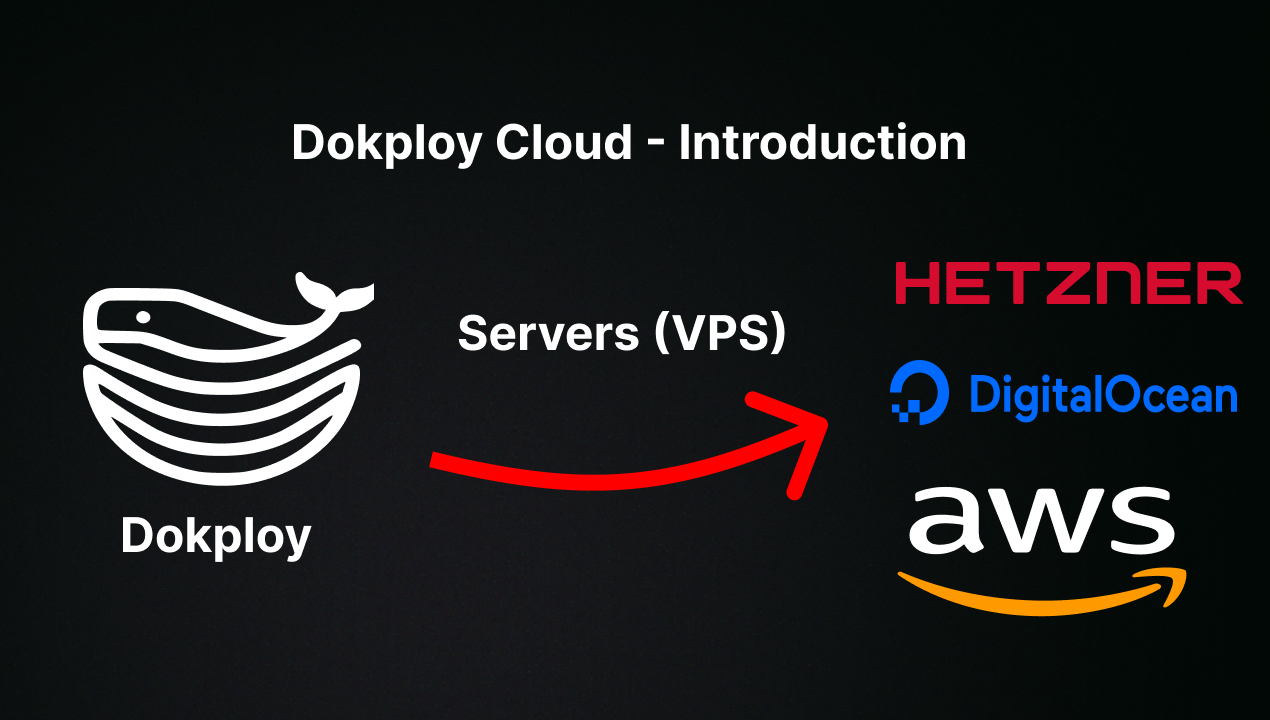
🤝 Contributing
Check out the Contributing Guide for more information.