mirror of
https://github.com/Dokploy/dokploy.git
synced 2026-10-15 21:31:11 +00:00
 Guillaume Juge
e629248dea
Guillaume Juge
e629248dea
Adds OVHcloud alongside Cloudflare, AWS Route53 and Porkbun, following the
existing DnsClient interface in packages/server/src/utils/dns/.

- ovh.ts implements listZones, listRecords, upsertRecord, updateRecord,
  deleteRecord and testConnection against the /domain/zone endpoints of the
  OVHcloud API, on any of its seven regional endpoints (ovh-eu/ca/us, kimsufi
  and soyoustart).
- A new `ovh` value was added to the DnsProviderType enum along with an
  ovhDnsConfigSchema (endpoint, applicationKey, applicationSecret, consumerKey)
  in the discriminated union, plus the Drizzle migration for the enum change.
- The application secret and the consumer key are masked/merged like the other
  providers' secrets in services/dns-provider.ts.
- UI: OVHcloud icon, an endpoint selector and the three credential fields in the
  DNS provider dialog, plus registration in the provider selector.

Three OVH-specific behaviours are handled explicitly:

- Requests are signed with `$1$` + sha1(applicationSecret+consumerKey+method+
  url+body+timestamp). The timestamp comes from the API's own clock via an
  unauthenticated GET /auth/time, since a host clock a few seconds off would get
  every call rejected; the measured drift is cached per endpoint for an hour.
- OVH only applies zone changes once the zone is explicitly refreshed, so every
  successful create, update and delete is followed by POST /domain/zone/{zone}
  /refresh.
- The record update payload carries no fieldType, so changing a record's type
  replaces the record (DELETE then POST) and returns the new id.

The record listing endpoint returns ids only, so each record is fetched
individually with the fan-out capped at 8 concurrent requests.

Also fills in the missing Porkbun label in show-dns-providers.tsx, which fell
back to displaying the raw enum value.

Co-Authored-By: Claude Opus 5 (1M context) <noreply@anthropic.com>

Join us on Discord for help, feedback, and discussions!

Dokploy is a free, self-hostable Platform as a Service (PaaS) that simplifies the deployment and management of applications and databases.
✨ Features
Dokploy includes multiple features to make your life easier.
- Applications: Deploy any type of application (Node.js, PHP, Python, Go, Ruby, etc.).
- Databases: Create and manage databases with support for MySQL, PostgreSQL, MongoDB, MariaDB, libsql, and Redis.
- Backups: Automate backups for databases to an external storage destination.
- Docker Compose: Native support for Docker Compose to manage complex applications.
- Multi Node: Scale applications to multiple nodes using Docker Swarm to manage the cluster.
- Templates: Deploy open-source templates (Plausible, Pocketbase, Calcom, etc.) with a single click.
- Traefik Integration: Automatically integrates with Traefik for routing and load balancing.
- Real-time Monitoring: Monitor CPU, memory, storage, and network usage for every resource.
- Docker Management: Easily deploy and manage Docker containers.
- CLI/API: Manage your applications and databases using the command line or through the API.
- Notifications: Get notified when your deployments succeed or fail (via Slack, Discord, Telegram, Email, etc.).
- Multi Server: Deploy and manage your applications remotely to external servers.
- Self-Hosted: Self-host Dokploy on your VPS.
🚀 Getting Started
To get started, run the following command on a VPS:
Want to skip the installation process? Try the Dokploy Cloud.
curl -sSL https://dokploy.com/install.sh | bash
For detailed documentation, visit docs.dokploy.com.
Contributors 🤝
📺 Video Tutorial
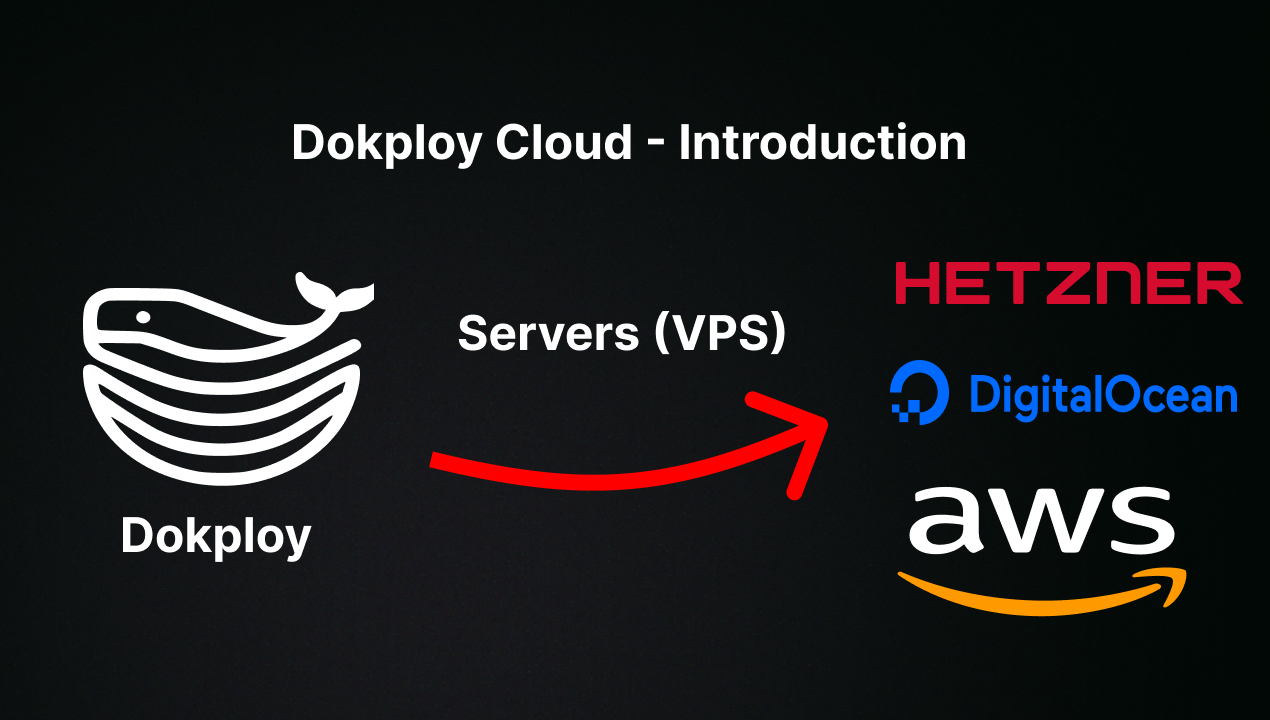
🤝 Contributing
Check out the Contributing Guide for more information.